
Heat pump testing — how fast does it heat?
 HQ
HQ
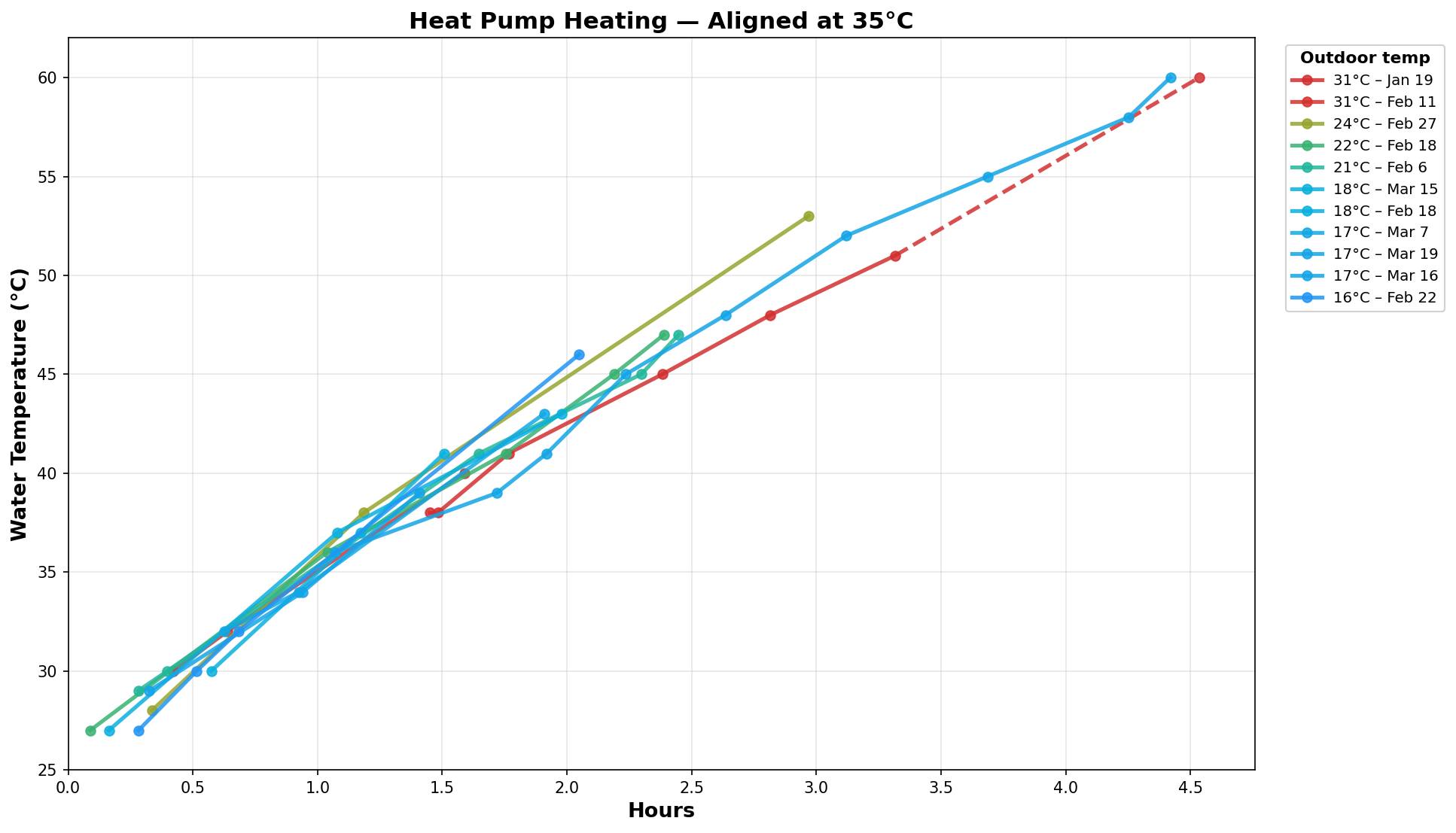
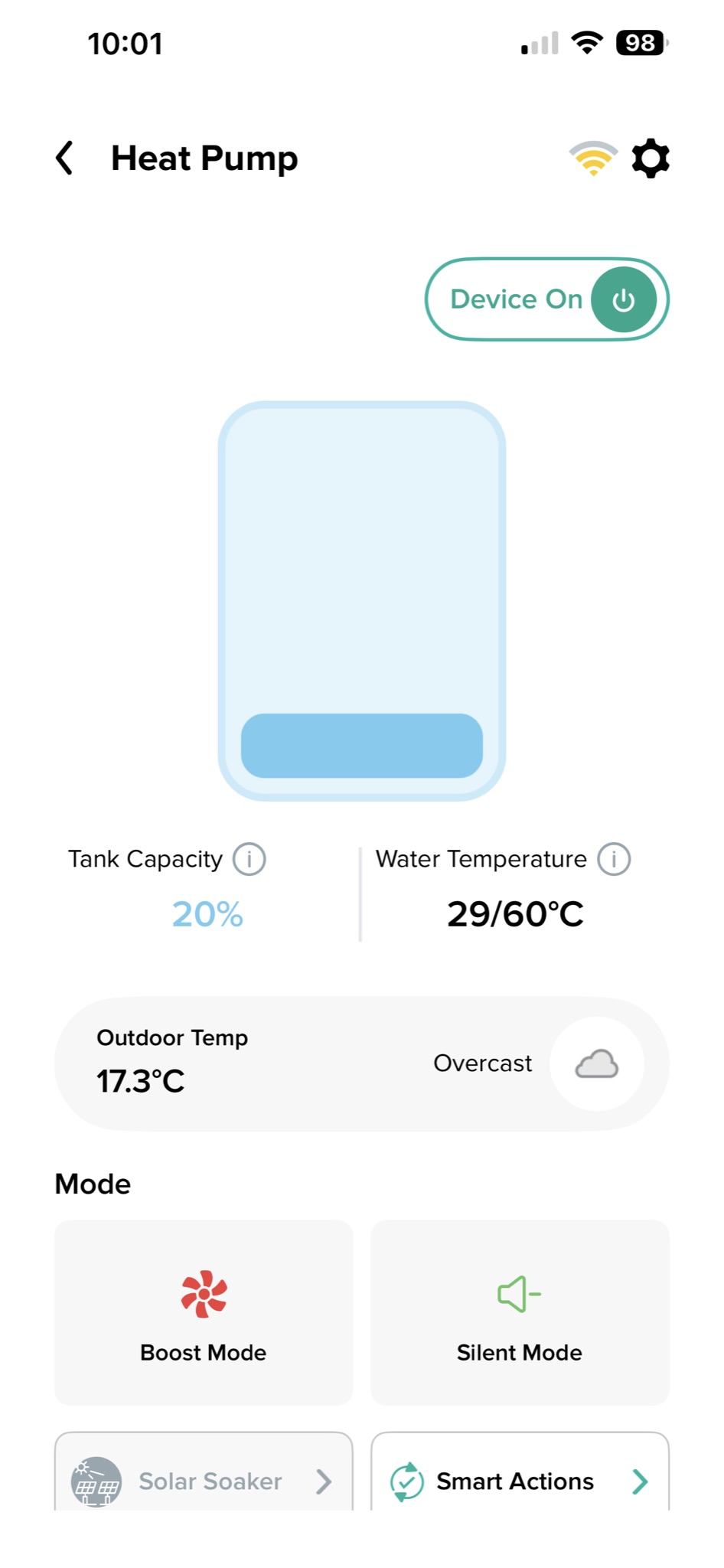
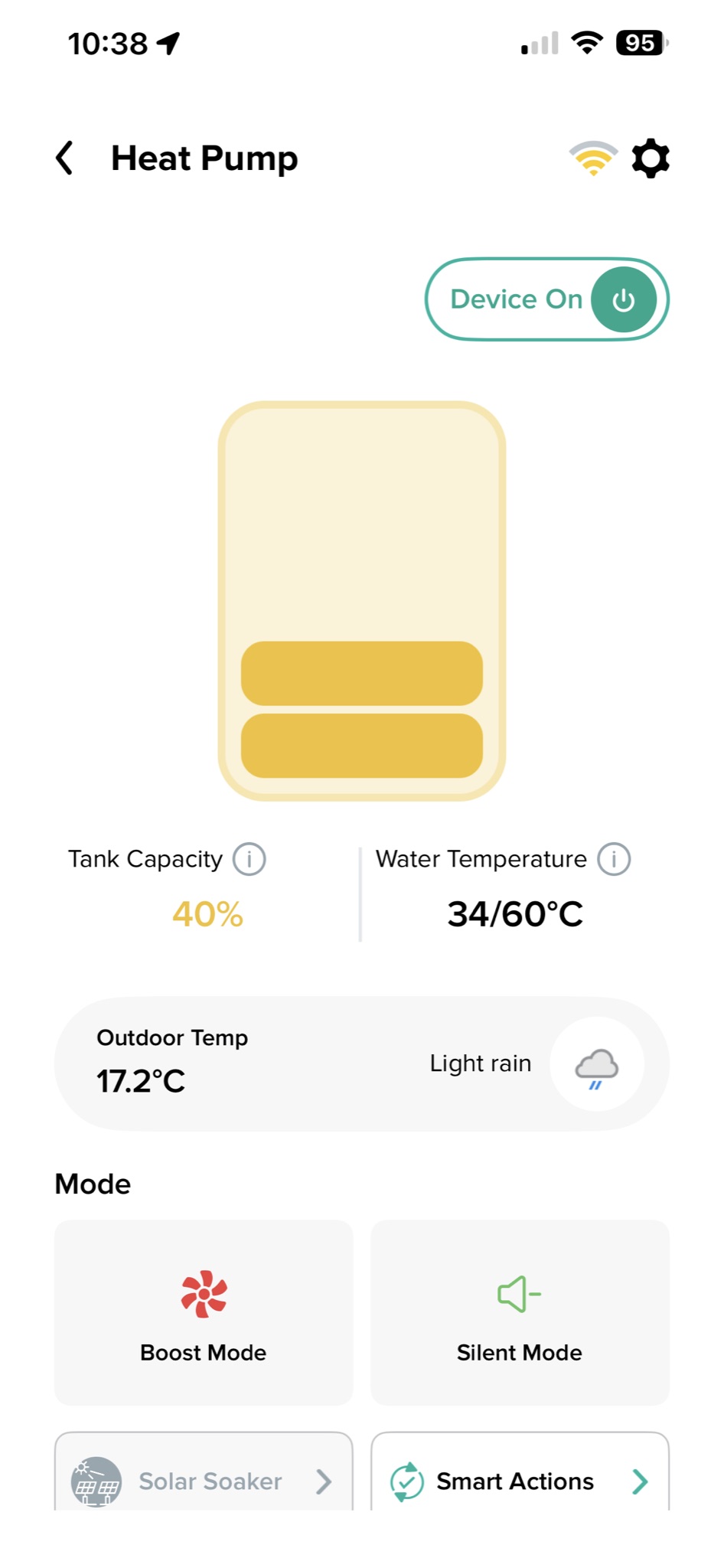
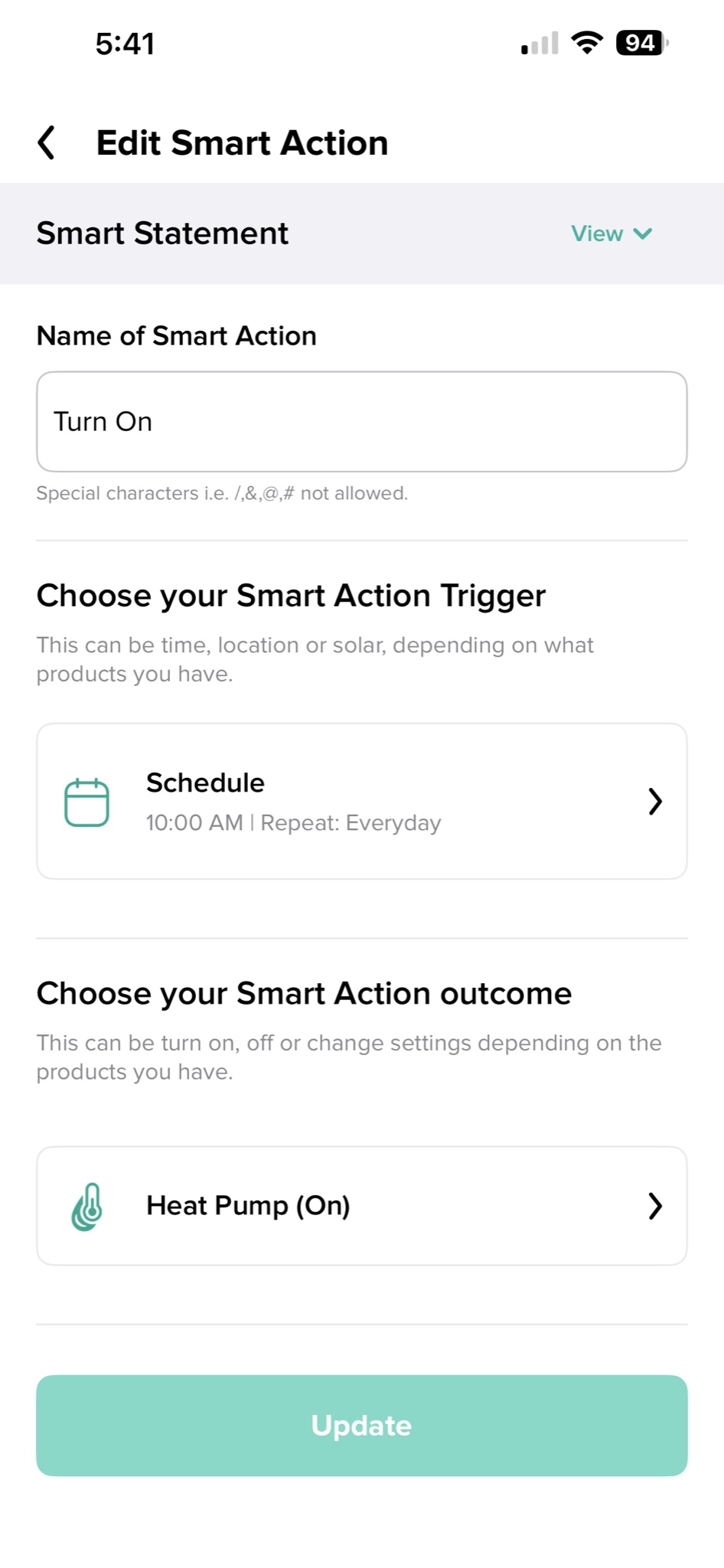
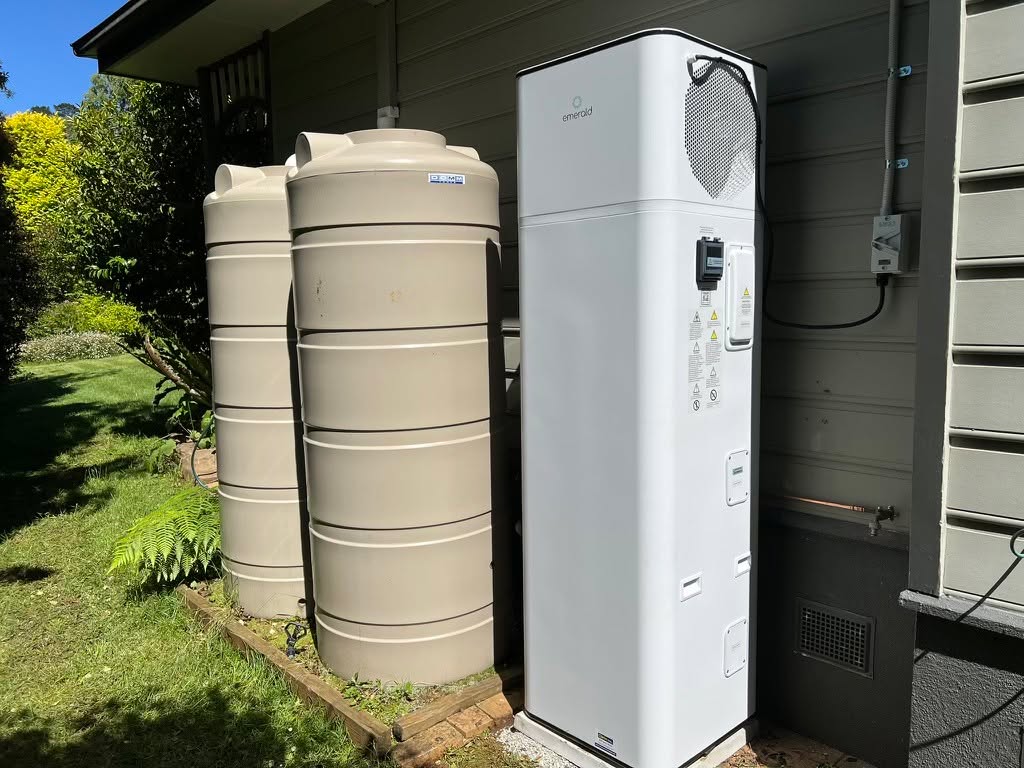
In my December post about our heat pump installation, I mentioned that one of the reasons I chose Emerald was the integrated app. It shows the tank capacity, water temperature, outdoor temperature, and lets me turn it on and off or activate Boost Mode remotely. I've since used it to answer a question: how long does it actually take to heat the water, and does outdoor temperature make a difference?
Over the past couple of months, I've been taking semi-random screenshots of the Emerald app at intervals through the day, tracking the water temperature as it heats from "Low" (around 25–30°C) up to the 60°C target. I did this on 11 different days, with outdoor temperatures ranging from about 14°C to 32°C.
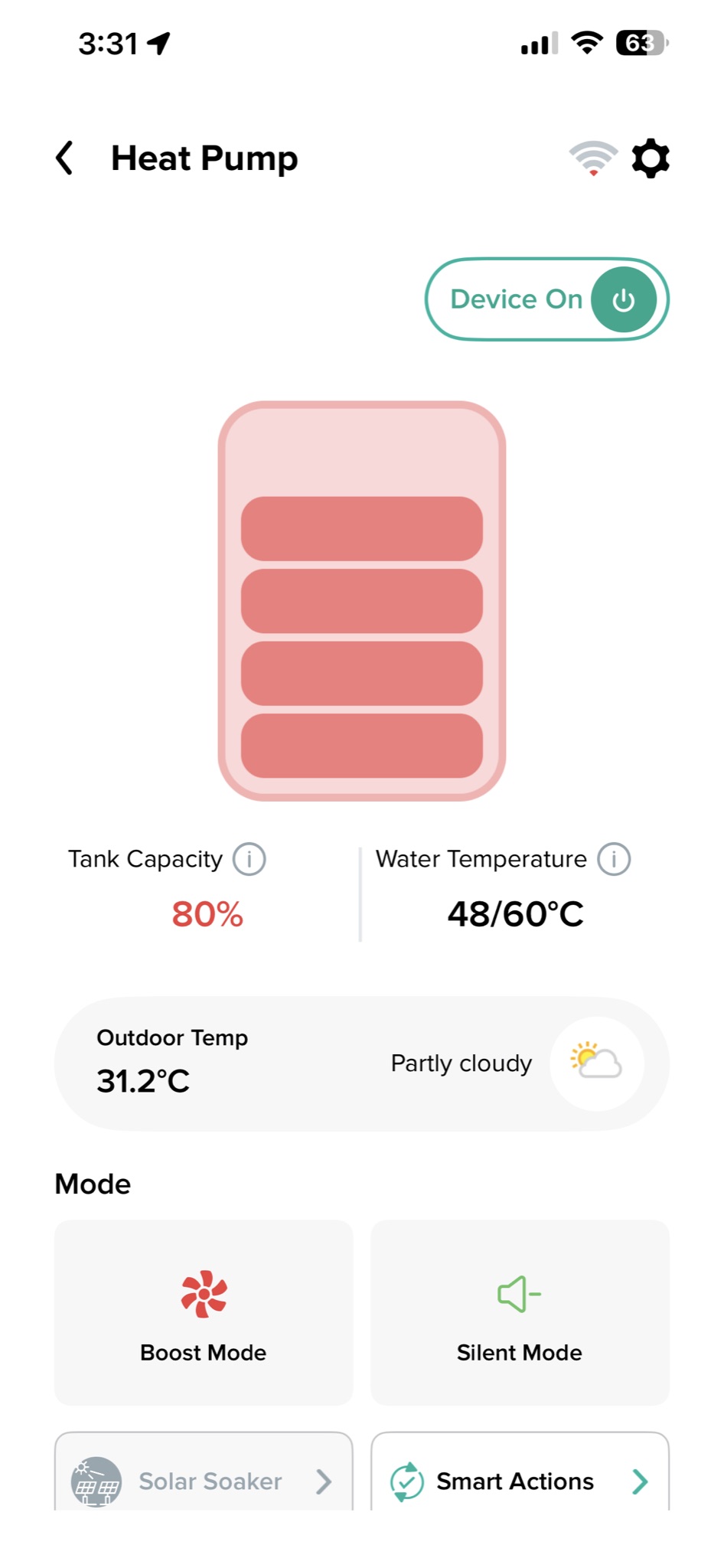
I then used AI (Claude, by Anthropic) to read all 87 screenshots, extract the data, and plot it on a chart. The chart shows each day's heating curve overlaid, with the lines colour-coded by outdoor temperature — red for hot days, blue for cool days. We might expect to see the warmer days heating much faster, since a heat pump pulls heat from the outside air. The hotter the air, the more heat available to pump, right?
Well, the data didn't really show that. The heating rate is remarkably consistent regardless of outdoor temperature. Whether it was a 32°C summer day or a 14°C evening, the heat pump heats at roughly 8–10°C per hour. There's some variation day to day, but it's mostly noise from my irregular screenshot timing rather than a clear outdoor temperature effect.
In hindsight, this makes sense when you realise that the heat pump shifts thermal energy, which is roughly proportional to the absolute temperature, which is measured in Kelvin, rather than Celsius. Here are some technical figures (that you can skip): 0°C is not actually zero heat — it's 273 Kelvin. So, when we say it's 14°C outside, that's 287K, and 32°C is 305K. That outdoor range of 18 degrees Celsius sounds big, but it's only about a 6% difference in the actual amount of thermal energy in the air. Similarly, heating water from 25°C to 60°C sounds like you're more than doubling the temperature, but in Kelvin that's 298K to 333K — only a 12% increase. The heat pump is working across a relatively narrow band of absolute temperatures, so its performance stays fairly consistent. You'd probably need to test in near-freezing conditions to see a noticeable drop in heating rate.
This is good news. It means the heat pump performs consistently in the range of conditions we get here in the Dandenong Ranges (Emerald, VIC). On a typical day, starting from low/empty, it takes about 3.5 to 4.5 hours to heat the full 320L tank to 60°C. That's comfortably within a day's solar generation window.
I also checked whether the pump slows down as the water gets hotter — you might expect it to struggle more pushing heat into an already-hot tank. Nope. The heating rate is essentially flat from 27°C all the way to 60°C. The pump just chugs along at the same pace regardless.
A few practical observations from three and a half months of use:
1. I've set the app's Smart Actions to heat between 10am and 8pm each day, which lines up nicely with our solar generation and means the fan noise won't disturb anyone sleeping. I had some early issues with the Smart Actions not triggering reliably, but I fixed that by improving the WiFi signal to the pump and setting the triggers to retry after five minutes.
2. Even when the app shows "Low" water temperature (below 30°C), the shower is actually hot. I think this is because the temperature sensor is in the middle of the tank, but hot water rises to the top, so the water drawn from the top of the tank is hotter than what the sensor reads.
3. We currently have three adults in the house, and we had four for two weeks. A couple of people sometimes take pretty long showers. We have not run out of hot water, except when I forgot to turn it on after testing. We should probably install some water-saving shower heads though, because we're going through a lot of water.
4. The only time I used Boost Mode was on day one, just to test it. Never needed it since.
Links:
Read about the heat pump installation in my previous post:
https://www.facebook.com/share/p/18ri5UVwZi/
Read about our experience with solar, battery and other electrification, in our Tesla Tripping blog, starting with:
https://www.facebook.com/share/p/188ddwfbVt/