
What do all the electricity measurements mean?
 FB
FB
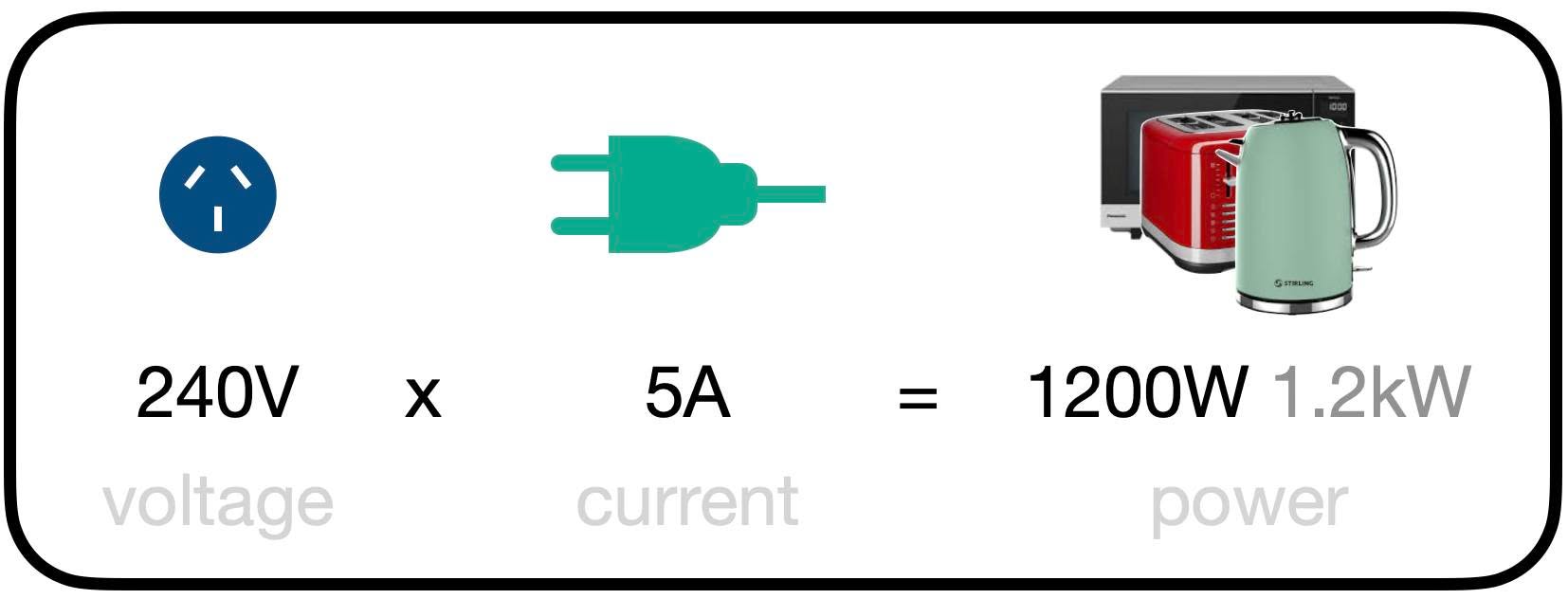
1. Australian household electricity runs at about 240V “volts”. All your power points and devices are 240V. This is basically a measure of the force used to push the electricity.
2. The “current” is basically the throughput of electricity, measured in Amps. It varies for different devices. A modern LED light bulb uses less than 0.1A (Amps). A toaster or heater will use around 8A. The typical maximum allowed by a standard power point is 10A.
3. The total power of the electricity is measured in watts. We multiply the volts by the amps (voltage x current) to get the watts. For example, if your appliance uses 5A at 240V, then that’s 5 x 240 = 1,200 W, which is 1.2kW (kilowatts). A light bulb uses less than 0.1kW.
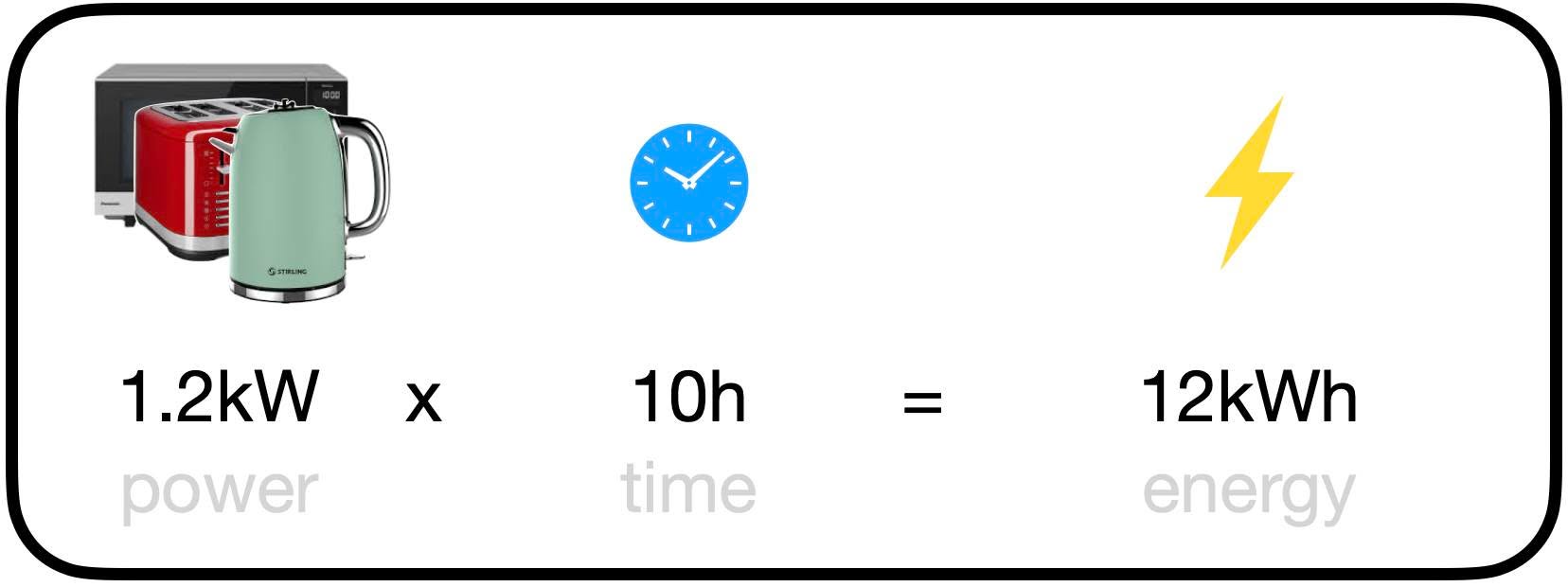
4. The total energy used by a device is calculated as the power x time. For example, if you use an appliance running at 1.2kW for 10 hours, then it uses 1.2 x 10 = 12kWh (kilowatt hours). A light bulb could run for days on the same 12kWh.
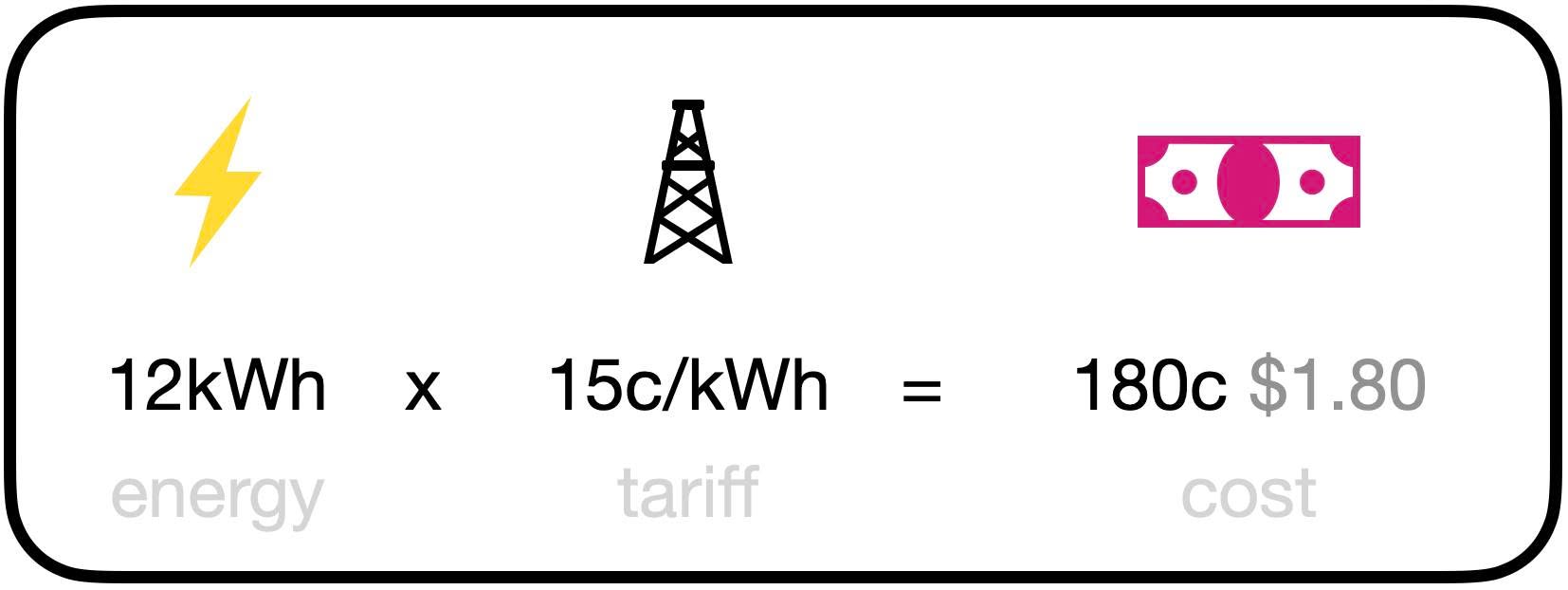
5. When you use electricity from the grid, your energy retailer charges you for each kWh of energy, at a given tariff rate. Depending on your retail plan, you might pay the same rate all day (maybe 40c per kWh), or different rates at different times (such as 10c per kWh off peak, and 70c per kWh peak).
What do the figures mean for a battery?
1. A battery provides power to your house. The power is measured in kW “kilowatts”. Our Tesla Powerwall 2 has a maximum power output of 5kW and a maximum input (charging rate) of 5kW. The newer Powerwall 3 has a maximum output of 7kW.
2. A battery can store a maximum amount of energy, measured in kWh (kilowatt hours). Our Powerwall 2 (and the Powerwall 3) stores a maximum of 13.5kWh or energy.
3. The power output of a battery in kW is literally the number of kWh it loses per hour. For example, our Powerwall 2 running a heater at 2kW, will use 2kWh each hour. So, in 6 hours it will use 2 x 6 = 12kWh, which is nearly its full 13.5kWh capacity.
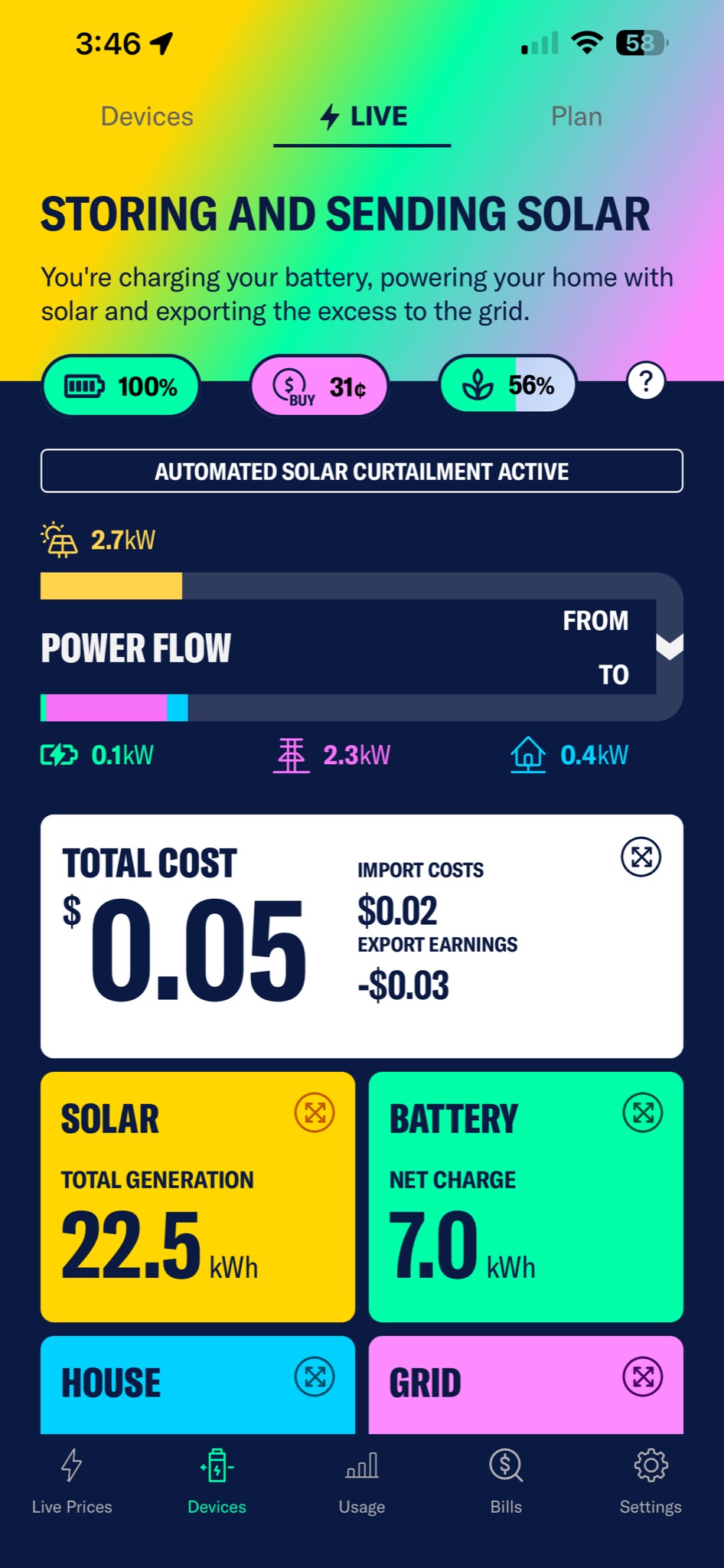
4. The battery usually shows energy as a percentage of total, often referred to as the SoC “state of charge”. When our Powerwall 2 is reading as 100%, it has the full 13.5 kWh or energy. When is reads as 20%, it only has 20% of 13.5kWh = 2.7kWh.
5. You typically set your desired minimum percentage charge for your battery. When/if it reaches the minimum (such as in the evening when your house has been using it for cooking at heating), it will stop draining the battery and instead draw power from the grid. It’s good to keep some reserve, above 0%, in case there is a blackout (no grid to fall back on).