
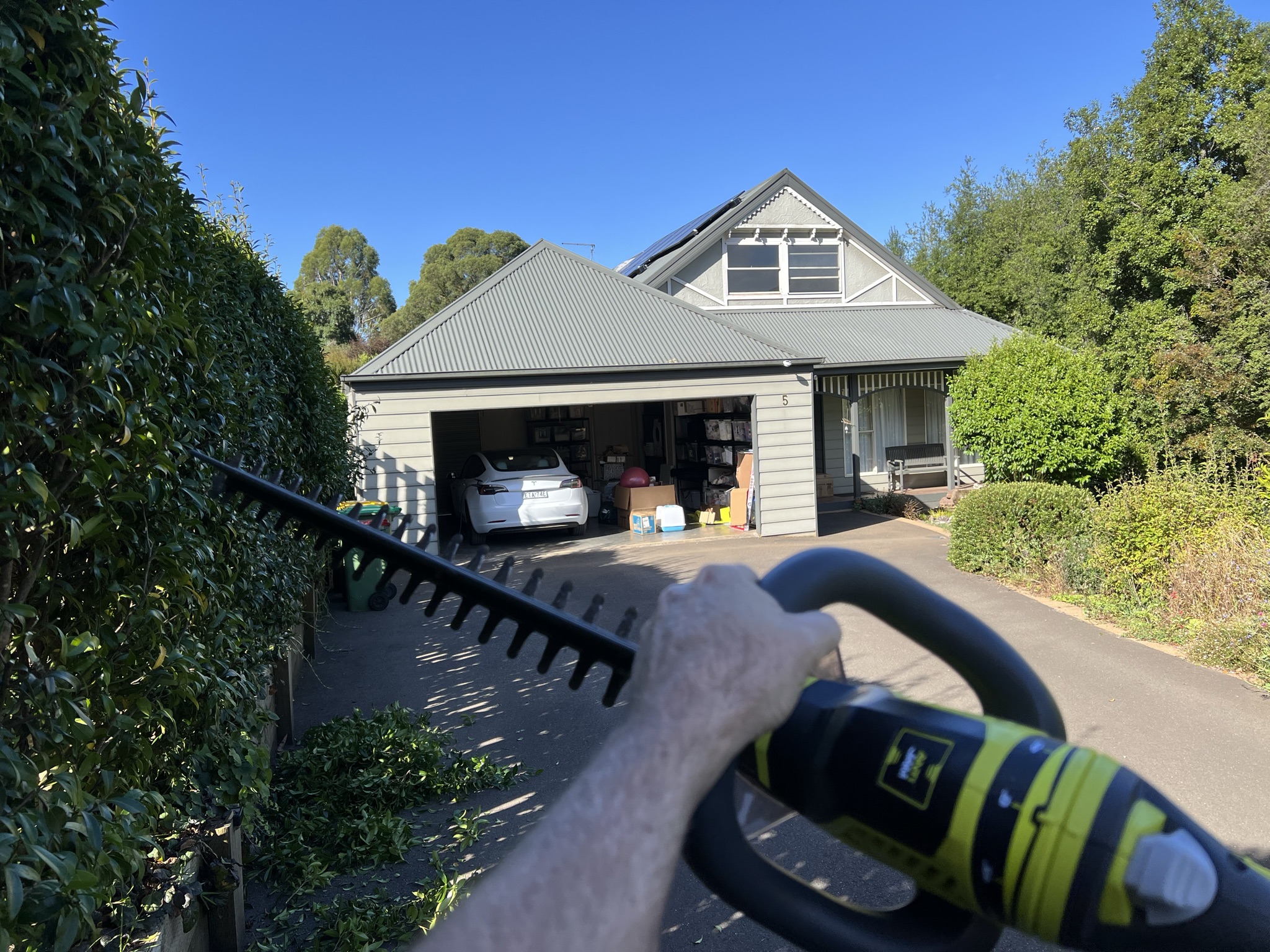
I tried out another “EV”, kind of – an Electric Vegetation cutter 😉. Okay, th
 HQ
HQ
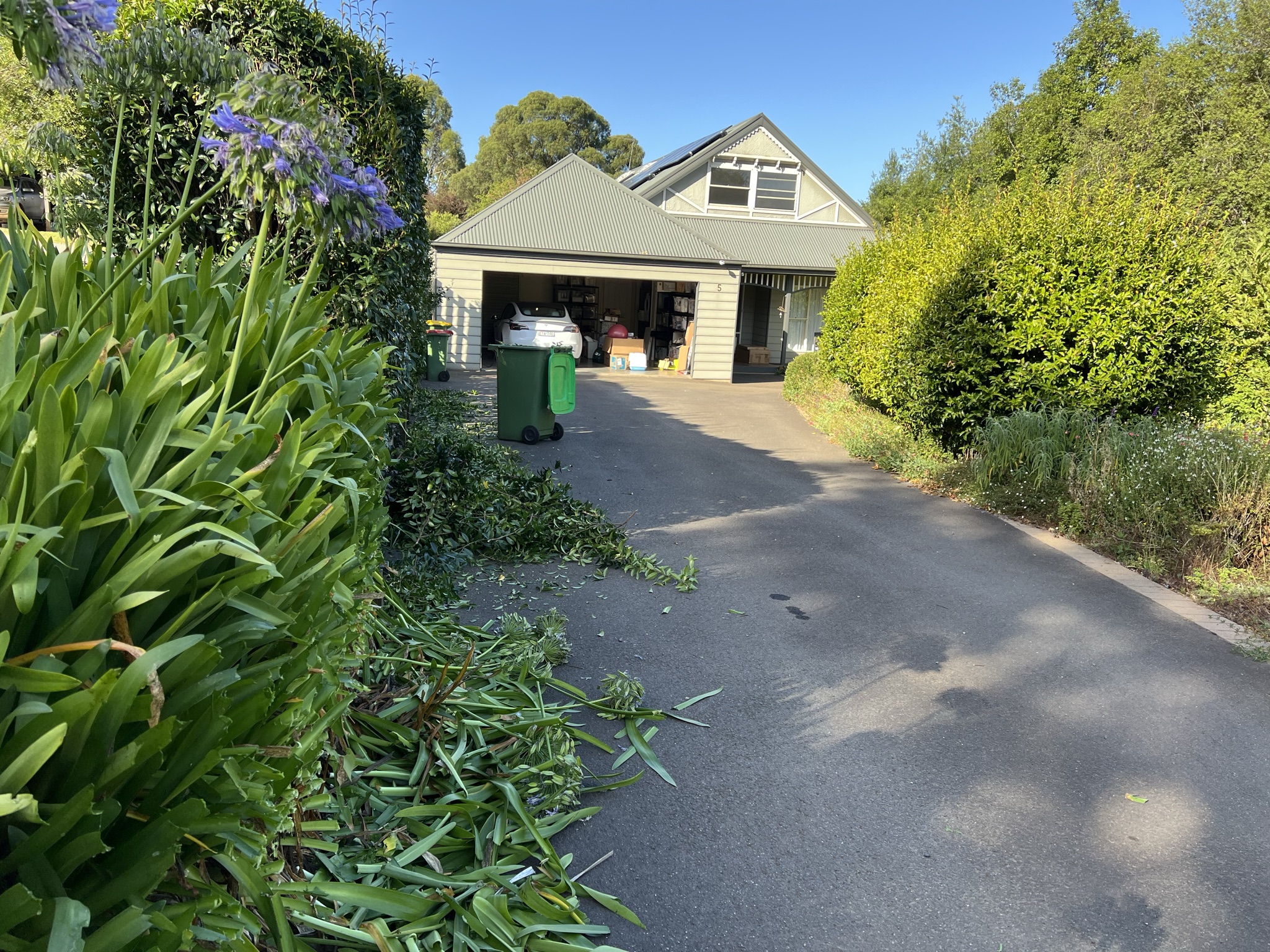


at’s a bit of a stretch. It’s an electric hedge trimmer. Emerald has so much vegetation, and our place is no exception. Hundreds of meters of hedges.
The RYOBI electric hedge cutter is fairly quiet, instantly turns on and off, and is fueled for free by the sun via our roof solar panels.
While cutting, it did occur to me that using a petrol powered hedge trimmer would be a much less pleasant experience. Much louder, with fumes in my face, heat and higher fire risk. I’d be dependant on an external fuel supplier to truck in petrol from hundreds of kilometers away, and I’d have to drive to a petrol station to get it.
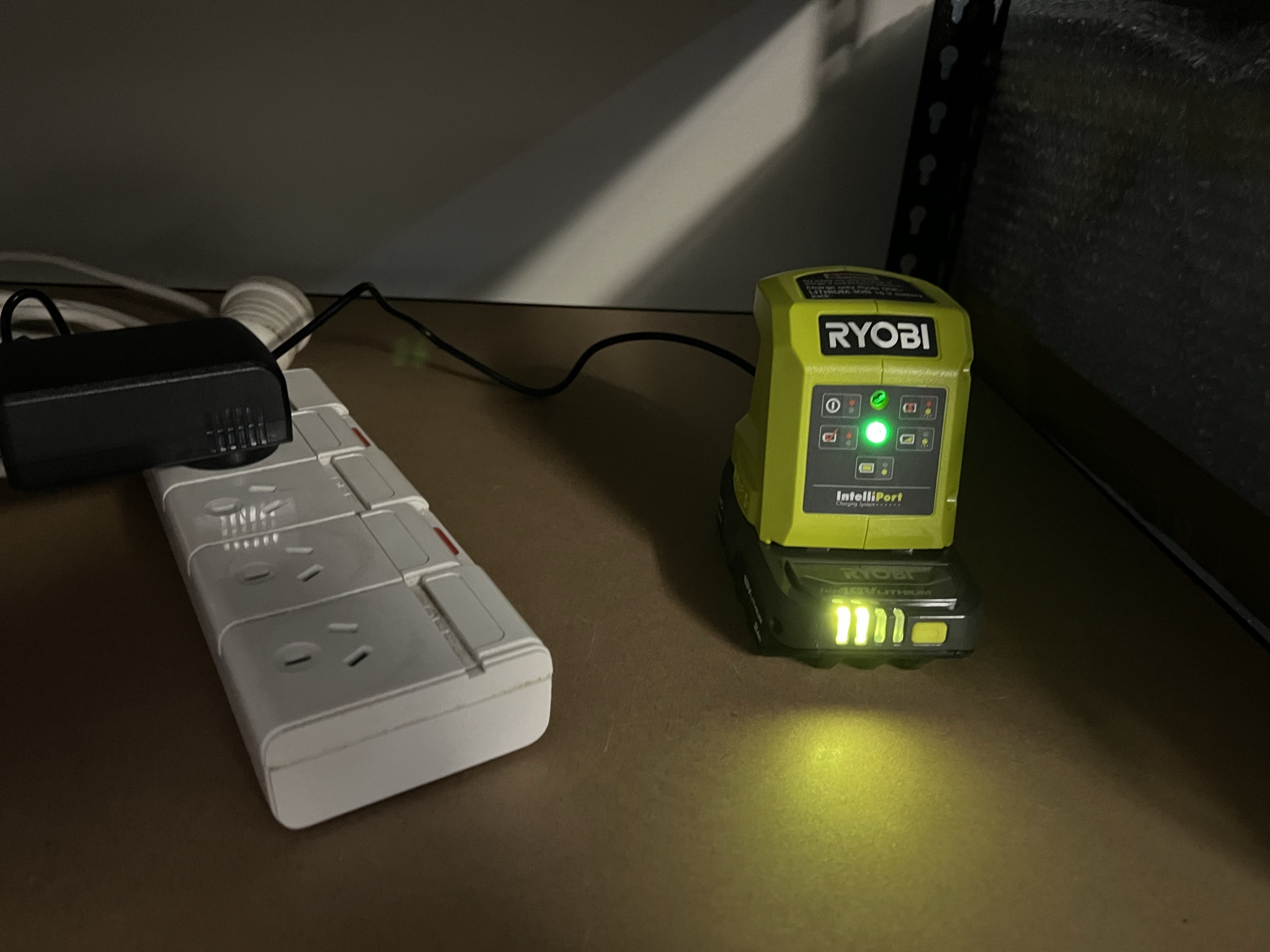
When the battery goes flat on this electric model, I just plug it in and walk away to do something else. It will take an hour or more to recharge, but I don’t have to do anything. Plugging in the battery takes a few seconds. If I really wanted to keep going immediately, I could swap with another charged battery, but I like the forced break 😉.
I am aware that lithium ion batteries come in different forms, with different safeguards. For example, our Tesla Powerwall house battery and Tesla car battery are encased in fire retardant and have a BMS (battery management system) that monitors charging, temperature and other factors. There have only ever been six EV fires in Australia, none of them while charging. But there are 50 petrol/diesel car fires per week. An EV is statistically at least 20 times less likely to catch fire than a petrol car. In contrast, e-scooters, e-bikes and other appliances aren’t as well regulated. There have been many fires and warnings. This Ryobi battery is probably a mid range risk. So, we will not be charging it while we sleep, inside the house, just to be safe.
https://thedriven.io/2023/05/16/petrol-and-diesel-cars-20…
https://www.swinburne.edu.au/news/2023/09/electric-vehicl…
With a petrol model hedge trimmer, it would take a few minutes for me to refuel, assuming I have some fuel. The human involved time is actually longer, but the “recharging” process is much faster with petrol.
As a society we seem to universally understand for appliances that electric/battery is an increasingly preferred energy source. In many cases we have just accepted that electric works better. I don’t see people still advocating for kerosene lamps instead of light bulbs (except in an episode of Downton Abbey), or wanting to refuel their mobile phones from petrol in five minutes rather than just plugging them into electricity overnight. We seem happy to vacuum using electric rather than having an engine puffing away. It all seems normal to us now.
Likewise, I think that acceptance and understanding of electric cars is becoming more normal in the mainstream. Hopefully the misinformation will fade away, along with the health impacts of fossil fuels.